Average Reviews:

(More customer reviews)I used this book for an Embry-Riddle class ASCI-515 Flight Simulation Systems.
This book was very concise without being too wordy or too complex. It doesn't spend an awful amount of time trying to explain the subject matter by adding text to make the book more voluminous. The author gets to the point, and doesn't beat the horse.
The author occasionally uses formulas and equations, but they are relatively simple and don't require any advanced mathematic skills. There are sufficient diagrams and photos appropriate to the matter being presented.
The only negative thing I could say is that the author does not devote enough focus on off-the-shelf flight simulation programs such as X-Plane v 9.0 or Microsoft Flight Simulator X Deluxe DVD and the significant difference between the two. My term paper for the class was based on the ability to use X-Plane as low-cost low-to-moderate fidelity flight simulation program for conducting initial flight testing of aircraft. I believe this is an area that could be expounded upon in the book.
Aside from those seeking to become a gifted expert, this book will provide the requisite knowledge for someone to become fully versed on Flight Simulation.
Click Here to see more reviews about: Flight Simulation: Virtual Environments In Aviation
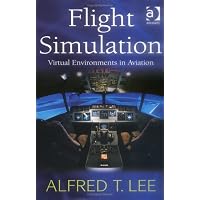
Advances in computer, visual display, motion and force cueing and other technologies in the past two decades have had a dramatic effect on the design and use of simulation technology in aviation and other fields. The effective use of technology in training, safety investigation, engineering and scientific research requires an understanding of its capabilities and limitations. As the technology has as its primary goal the creation of virtual environments for human users, knowledge of human sensory, perceptual, and cognitive functioning is also needed. This book provides a review and analysis of the relevant engineering and science supporting the design and use of advanced flight simulation technologies. It includes chapters reviewing key simulation areas such as visual scene, motion, and sound simulation and a chapter analyzing the role of recreating the pilot's task environment in the overall effectiveness of simulators. The design and use of flight simulation are addressed in chapters on the effectiveness of flight simulators in training and on the role of physical and psychological fidelity in simulator design. The problems inherent in the ground-based simulation of flight are also reviewed as are promising developments in flight simulation technology and the important role flight simulators play in advanced aviation research.The readership includes: flight simulation engineers and designers, human factors researchers and practitioners, aviation safety investigators, flight training management and instructors, training and instructional technologists, virtual environment design community, and regulatory authorities.

Click here for more information about Flight Simulation: Virtual Environments In Aviation

0 comments:
Post a Comment