Average Reviews:

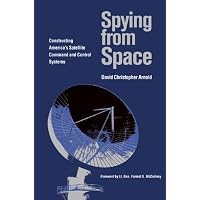
(More customer reviews)This is the first major published historical study of the development of the American satellite control system, the Air Force Satellite Control Facility. David Arnold's Spying from Space focuses on the command and control (C2) system set up for the CORONA satellite reconnaissance program in the 1960s and deals significantly with much its early history. I am pleased to recommend this book by David Arnold, an Air Force officer with a Ph.D. in history from Auburn University and a colleague in the small community of historians interested in spaceflight.
Arnold focuses his attention on the development and operations of the Air Force Satellite Control Network (AFSCN). The network originated in the latter 1950s and 1960s to serve the national security apparatus of the cold war. Managed from its control center at Sunnyvale, California, and at other "undisclosed locations" throughout the decades its operators oversaw the systems necessary to gather satellite reconnaissance data. No doubt, the ability to see what the Soviet Union was doing, and the counter-capability of the Soviets to see what the United States was up to, helped in ways still not fully understandable to keep the cold war from becoming a hot one. At least military decisions were made on the basis of "real" data rather than supposition!
Arnold begins with the efforts of the Department of Defense in the 1950s to expand capabilities into space. At first this included the development of missile technology for the delivery of nuclear weapons to the Soviet Union, but quickly the ability to fly reconnaissance satellites required additional research and development (R&D). He traces the evolution of this system since its first development.
This is a very fine book, one that should be on the shelf of anyone who seeks to understand the development of the U.S. military in space.
Click Here to see more reviews about: Spying from Space: Constructing America's Satellite Command and Control Systems (Centennial of Flight Series)
On August 14, 1960, a revolution quietly occurred in the reconnaissance capabilities of America. When the Air Force C-119 Flying Boxcar Pelican 9 caught a bucket returning from space with film from a satellite, the American intelligence community gained access to previously denied information about the Soviet Union. The Corona reconnaissance satellite missions that followed lifted the veil of secrecy from the communist bloc, revealing, among other things, that no "Missile Gap" existed.This revolution in military intelligence could not have occurred without the development of the command and control systems that made the Space Race possible. In Spying from Space, David Christopher Arnold tells the story of how military officers and civilian contractors built the Air Force Satellite Control Facility (AFSCF) to support the National Reconnaissance Program. The AFSCF also had a unique relationship with the National Reconnaissance Office, a secret organization that the U.S. government officially concealed as late as the 1990s.Spying from Space fills a gap in space history by telling the story of the command and control systems that made rockets and satellites useful. Those interested in space flight or intelligence efforts will benefit from this revealing look into a little-known aspect of American achievement.


0 comments:
Post a Comment