Showing posts with label british. Show all posts

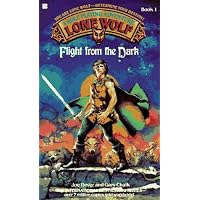
Flight from the Dark (Lone Wolf, Book 1) Review

Flight from the Dark (Lone Wolf, Book 1)
Average Reviews:

(More customer reviews)
Gorwing up in the 80's and early 90's I had always been a fan of game books like Choose your own adventure, Advanced Dungeons, interplanetary spy etc. I first saw the Lone wolf books in a 7th grade book fair and my friend convinced me to buy one. I bought Lone Wolf 8: The Jungle of Horrors. After completing that book I was hoooked. I set out to purchase more books from this series, because I had very little money at the time, I only managed to add the following to my collection:
Lone Wolf 1: Flight from the dark
Lone Wolf 3: Caverns of Kalte
Lone Wolf 5: Shadow on the Sand
Lone wolf 10: The Dungeons of Torgar
Lone wolf 13: The Plague Lords of Reul
Lone wolf 15: The Dark Crusade
Lone wolf 16: The Legacy of Vashna
Soon after I really started getting into these books they stopped publishing them. Over the years the books I did have were misplaced. I am a lot older now and recently had a bit of nostalgia and decided to hunt down books 1 - 16 because I thought 16 was the last Lone wolf book. I soon found out that Dever actually had 20 books published in the U.S. I now have books 1 - 19 still searching for that elusive #20. I wasnt planning on reading them, I just wanted to collect them. But after deciding to read Book #1 again I was hooked all over again, I am now on book 8 and plan to complete the entire series whenever I can get Lone wolf 20.
In a world dominated by video games and TV, kids these days never seem to want to read anymore. When I was growing up, video games systems were just starting to come out and were many times too expensive for my parents to afford. Reading books and playing outside were my only forms of entertainment and I think it has done me well in the long run. Books will probally never be a form of entertainment for young kids these days as it was for people growing up in my generation. Who knows one day, books will probally be completely phased out. What a shame. I just wish more kids these days would see that reading can be fun, entertaining and educational at the same time as Joe Dever proved that to me.

Click Here to see more reviews about: Flight from the Dark (Lone Wolf, Book 1)

You are Lone Wolf. In a devastating attack the Darklords have destroyed the monastery where you were learning the skills of the Kai Lords. You are the sole survivor. You swear revenge. But first you must reach Holmgard to warn the King of the gathering evil. The servants of darkness relentlessly hunt you across your country and every turn of the page presents a new challenge. Choose your skills and your weapons carefully - for they can help you succeed in the most fantastic and terrifying journey of your life. The LONE WOLF adventures are a unique interactive fantasy series - each episode can be played separately or you can combine them all to create a fantastic role-playing epic.--This text refers to an alternate Paperback edition.

Buy Now

Click here for more information about Flight from the Dark (Lone Wolf, Book 1)

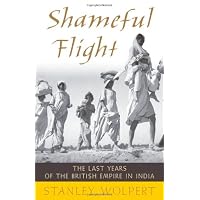
Shameful Flight: The Last Years of the British Empire in India Review

Shameful Flight: The Last Years of the British Empire in India
Average Reviews:

(More customer reviews)
The book is outstanding for many reasons: It is written in an easy style that would force you to read it one go, quite rarely seen in books covering history. Yet the book has sufficient background research that can only be expected from UCLA's professor of history. It has a balanced presentation of facts by a scholar far removed by geography and time from the events.
Stanley Wolpert provides some interesting insights:
British rule of India is a tale of incompetence:
In 1943, India produced 50 million tons of food grains - enough to feed its population of 400 million. Yet 1.5 million people died of starvation in Bengal that year primarily due to mismanagement.
Bengal's governor Herbert and Viceroy Lord Wavell pleaded for food grains to be sent to Bengal. Britain's war transport minister Baron Frederick James Leathers kept 6 million tons stored in ships in Indian Ocean unused. Wavell's report to London says "the famine in Bengal was largely due to ministerial incompetence".
The incompetence was acknowledged in London as well. Churchill's Secretary of State for India Leopold Amery confesses in a private letter to the Viceroy Linlithgow "nothing has convinced me more than the Cabinet meetings.... of the fundamental incapacity of a British cabinet to try and govern India".
Viceroy Wavell condemns Churchill four years later after sitting in one cabinet meeting: "He hates India and everything to do with it. Winston knows as much of the Indian problem as George III did of the American colonies!"British rule of India is a tale of political insensitivity.
The best example of this insensitivity is Winston Churchill's peevish telegram to his Viceroy asking "why Gandhi has not died yet?" after releasing the Mahatma from prison because of medical conditions. Not a class-act in international politics.Partition could have been avoided with greater wisdom in Indian/British leadership.
In 1937 provincial elections the Congress won clear majority in six of the eleven provinces. Jinnah's Muslim league failed to win a single province. Jinnah appealed to Nehru to agree to coalition ministries in the multicultural provinces. Nehru refused and retorted that there were only two parties left: "the British and the Congress". Jinnah devoted the next ten years to create Pakistan. If Nehru had pursued an "inclusive style of politics" there would have been no opportunity to "divide and rule".
1946 offered another opportunity to unite. British Secretary of State, Lord Pethick Lawrence advocated a coalition cabinet (made up of Congress and Muslim League) that decides by consensus and not by majority vote. Nehru declined to cede parity to Muslim league and share power. Maulana Abul Kalam Azad sadly reflected in his autobiography that "Jawaharlal's mistake in 1937 had been bad enough. The mistake of 1946 proved even more costly". This resolved Jinnah to insist on partition.
Britain played the "divide and rule" card to the long term detriment of India. Viceroys were quick to ignore good examples. Chief Ministers Sikandar Hayat Khan and Fazl-i-Husain governed Punjab province by using local patriotism and common language to unify the multi-religious constituency. It was the same Punjab that recorded the largest death triggered by inept governing.British rule had no strategy to deal with partition.
Britain, as a colonial ruler, has a history of shameful behaviour. In 1942, when Britain exited Burma "the civil administration suddenly collapsed and those in charge sought their own safety. Private motor cars were commandeered for the evacuation of Europeans, leaving their owners stranded. .... The city of Rangoon was left at the mercy of .... hardened criminals". There was no thought for life after British rule.
Months ahead of Indian independence British staff were evacuated to Britain leaving no credible law enforcement mechanism for the infant governments of India and Pakistan to deal with the migration induced violence and death.
Mountbatten was aware of the likely violence and the lack of a plan to deal with this. Though Cyril Radcliffe's maps with the boundary lines of India and Pakistan were ready earlier, Mountbatten kept it under lock and key until the pageantry, splendor and photo opportunities of Indpendence day and the British could no more be blamed for the violence or the ineptitude with which it was handled. His reasoning: "the earlier it was published, the more the British would have to bear the responsibility for the disturbances which would undoubtedly result". Reasonable opportunity to manage the migration was denied for the sake of glory.
Says Bengal Secretary John Dawson Tyson, "Mountbatten's focus was on withdrawal in fairly peaceful conditions..... the India after 15 August will not be the kind of country I should want to live in"
Rear Admiral Viscount Lord Louis Francis Albert Victor Mountbatten expressed what he thought about the way he had done his job in India to BBC's John Osmon in 1965. Thirty nine years later Osman says that though he dislikes using vulgar slang, the only honest way of reporting accurately what the last Viceroy said was "I fu....d it up".
Stanley Wolpert concludes that both India and Pakistan are still saddled with the bitter legacies of Great Britain's hasty, shameful flight.
Excellent book.


Click Here to see more reviews about: Shameful Flight: The Last Years of the British Empire in India


Buy NowGet 26% OFF

Click here for more information about Shameful Flight: The Last Years of the British Empire in India

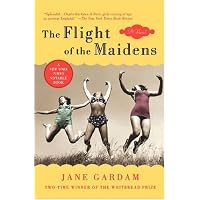
The Flight of the Maidens Review

The Flight of the Maidens
Average Reviews:

(More customer reviews)
Jane Gardam's The Flight of the Maidens follows three young women during the summer before their entering university in England in 1946. That basic description may have you assuming that this novel would be a sweet, sentimental exploration of these three girls "growing up." I know that's what I thought it would be. It's not. All three young women face challenges that while completely believable, are not predictable or "canned" in any way. Each one of them surprised me in several ways, and it is this element of subtle surprise that I think distinguishes this novel. The characters are charming, without being corny; the story is entertaining, without being predictable. Enjoy.

Click Here to see more reviews about: The Flight of the Maidens


Buy NowGet 14% OFF

Click here for more information about The Flight of the Maidens